
Why Warm-Ups Matter for Youth Athletes: How Proper Movement Prep Reduces Injury Risk
Written by a Director of Sports Medicine and Youth Strength & Conditioning with experience supporting developing athletes in youth sport environments. This article is designed to help parents understand how proper warm-ups reduce injury risk in growing athletes.
For many youth athletes, warm-ups are treated as something to get through as quickly as possible—jog a lap, stretch a little, then start practice.
From a sports medicine perspective, this is one of the most missed opportunities in youth sports.
A properly designed warm-up is not just about preparing for performance in that moment. For developing athletes, warm-ups play a critical role in injury prevention, movement development, and long-term athletic health. When done consistently and correctly, they help young athletes move better, tolerate training stress more effectively, and reduce the risk of overuse injuries over time.
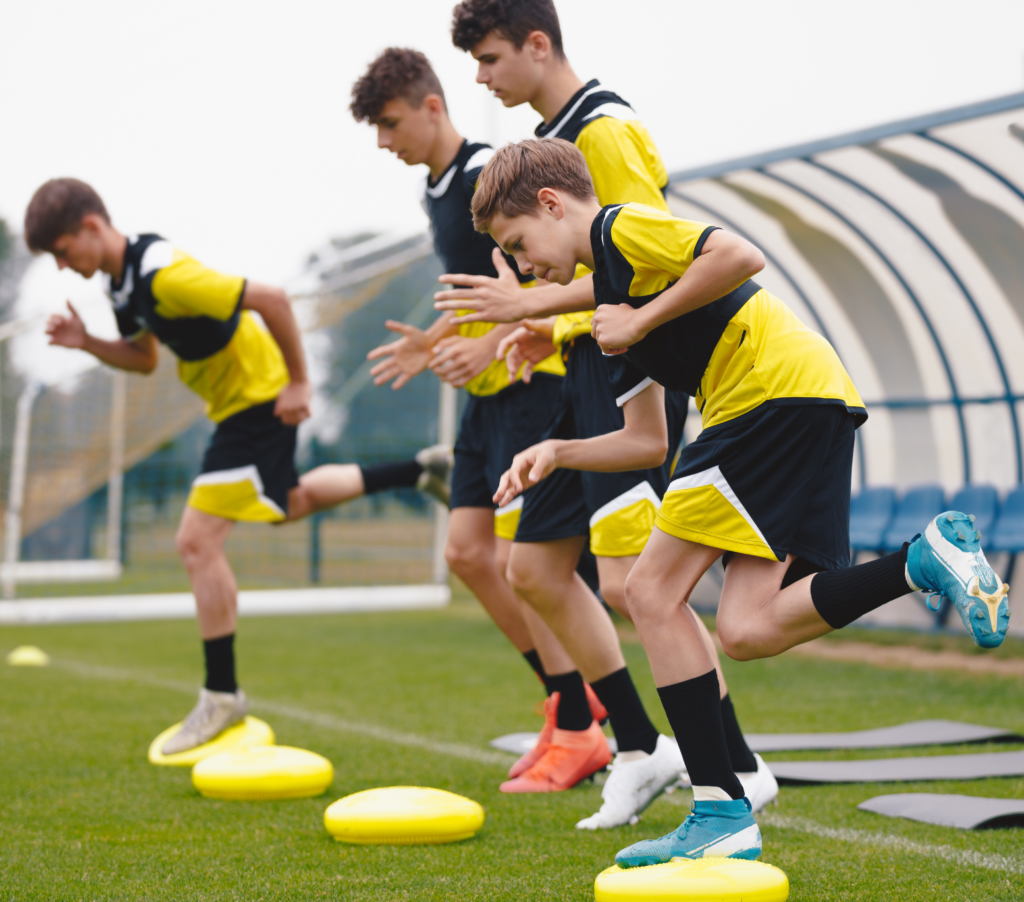
What a Warm-Up Should Accomplish for Youth Athletes
In youth sports, a warm-up should do far more than raise heart rate or break a sweat. Because children and adolescents are still growing, their bodies require intentional preparation before being exposed to repetitive or high-intensity sport demands.
From a sports medicine and youth development standpoint, a proper warm-up should:
- Prepare joints, muscles, and connective tissue for loading
- Reinforce safe movement patterns
- Improve coordination and body awareness
- Identify stiffness, asymmetry, or fatigue before full participation
When warm-ups are rushed or inconsistent, athletes are asked to perform complex movements without adequate preparation—significantly increasing injury risk.
Why Youth Athletes Are Especially Vulnerable Without Proper Warm-Ups
Youth athletes are not simply smaller adults. Their musculoskeletal and nervous systems are still developing, which changes how their bodies respond to training.
During growth spurts, bones lengthen rapidly while muscles and tendons adapt more slowly. This creates temporary decreases in coordination, balance, and flexibility. Without proper movement preparation, young athletes are more likely to move inefficiently, placing excessive stress on joints and growth plates.
From a clinical perspective, many overuse injuries in youth sports are not caused by a single bad movement, but by repeated movement performed without adequate preparation.
Warm-Ups as a Tool for Injury Prevention
In professional and clinical settings, warm-ups are often viewed as a form of daily movement assessment. They provide insight into how an athlete is moving on that particular day.
A well-structured warm-up allows coaches, parents, and athletes to notice:
- Reduced range of motion
- Poor balance or control
- Asymmetrical movement patterns
- Signs of fatigue or incomplete recovery
For youth athletes, this information is invaluable. It helps adjust training intensity when needed and prevents pushing through movement patterns that may increase injury risk.
The Connection Between Warm-Ups and Overuse Injuries in Youth Sports
Overuse injuries develop when repetitive stress exceeds the body’s ability to recover. Warm-ups play a key role in managing this balance.
Consistent movement preparation:
- Improves tissue readiness before repetitive sport motions
- Reinforces efficient movement patterns day after day
- Reduces chaotic or compensatory movement under fatigue
When warm-ups are skipped or poorly designed, athletes often compensate during practice or competition. Over time, these compensations contribute to the gradual breakdown seen in overuse injuries.
What Makes a Warm-Up Appropriate for Youth Athletes
Not all warm-ups are created equal—especially for kids.
Effective youth warm-ups emphasize:
- Controlled, full-body movement rather than static stretching
- Balance and coordination to support developing nervous systems
- Gradual increases in intensity, not immediate high-speed drills
Warm-ups that are too aggressive or sport-specific too early can actually increase injury risk by loading tissues before they are prepared.
From a youth strength and conditioning standpoint, the goal is not to exhaust the athlete, but to prepare the body to move well.
How Warm-Ups Support Long-Term Athletic Development
One of the most overlooked benefits of warm-ups in youth sports is their cumulative effect.
When young athletes perform the same high-quality movement patterns consistently:
- Motor control improves
- Movement efficiency increases
- Injury risk decreases over time
Warm-ups become one of the few opportunities in youth sports where movement quality can be addressed daily, regardless of the sport being played.
This is especially important in early and middle adolescence, when coordination often temporarily declines due to growth.
The Role of Strength Training and Warm-Ups Together
Warm-ups and strength training should work together—not separately.
While warm-ups prepare the body for activity, strength training builds the capacity to tolerate that activity safely. Strength training improves joint stability, neuromuscular control, and force absorption, while also supporting bone mineral density development during critical growth years.
When youth athletes warm up consistently and follow age-appropriate strength training principles, the result is a more resilient athlete who can better tolerate sport demands without excessive stress.
How to Use This Information as a Parent
Warm-up strategies in youth sports are not meant to complicate training—they are meant to create structure. The goal is not to add more time, but to ensure that the time spent preparing to train supports healthy growth and injury prevention.
The principles outlined here are based on sports medicine and long-term athlete development models commonly used to reduce injury risk in youth athletes. Applying even small improvements to movement preparation can meaningfully reduce repetitive stress over time.
What Parents Can Do Right Now to Support Safer Training
Parents don’t need to redesign their child’s entire training schedule to make an impact. A few intentional shifts can significantly reduce injury risk:
- Ensure your child performs a consistent, intentional warm-up before practices and games.
- Look for warm-ups that include balance, coordination, and controlled movement—not just jogging or stretching.
- Recognize that poor movement during warm-ups often reflects fatigue or incomplete recovery.
- View warm-ups as a protective habit, not a formality.
For many families, starting with a structured, youth-appropriate warm-up is the most effective first step.
For parents seeking a more comprehensive approach, combining warm-ups with progressive strength and movement training helps young athletes build a foundation that supports both performance and long-term health.
👉 [Learn More About the Realigned Athletics Foundations Program]
A Final Perspective for Parents
Warm-ups are not about doing more—they are about doing what matters.
In youth sports, consistent movement preparation is one of the simplest and most effective ways to reduce injury risk, support healthy growth, and help young athletes move with confidence.
When parents understand the purpose behind warm-ups, they can better advocate for training environments that protect their child’s body today and support their development for years to come.