Is a Barbell Safe for Youth Athletes? What Parents Should Know
Disclosure: This article contains affiliate links. If you purchase through them, we may earn a small commission at no additional cost to you.
Is a Barbell Safe for Youth Athletes?
Is a barbell safe for youth athletes? Yes — when introduced properly, supervised correctly, and progressed gradually, barbell training can be safe and highly beneficial for young athletes. The key is scaled equipment, proper technique, and age-appropriate programming.
As a sports medicine professional with nearly two decades of experience working in collegiate athletics, I’ve seen this firsthand: the athletes who build strength early — correctly — are typically more durable later.
Let’s break down what parents actually need to know.
Is Weightlifting Safe for Kids?
Major organizations like the National Strength and Conditioning Association (NSCA) and the American Academy of Pediatrics support properly supervised youth strength training.
Research consistently shows:
- Strength training does not stunt growth
- Growth plate injuries are rare with supervision
- Injury rates are often lower than many organized sports
- Bone density and connective tissue strength improve
The risk is not the barbell itself.
The risk is:
- Poor supervision
- Max-effort lifting
- Improper progression
- Ego-driven training
When structured correctly, barbell training improves resilience.
What Age Can a Youth Athlete Start Using a Barbell?
There is no strict age cutoff. A youth athlete is ready for a barbell when they can:
✔️ Control bodyweight squats
✔️ Demonstrate proper hinge mechanics
✔️ Brace their trunk correctly
✔️ Follow coaching cues consistently
Some 11-year-olds are ready.
Some 15-year-olds are not.
Movement quality matters more than age.
What Is the Safest Barbell for Youth Athletes?
The safest option is a scaled junior barbell, not a full 45 lb adult Olympic bar.

A strong option to consider is a youth-scaled barbell from Titan Fitness.
Why this is safer:
- Lighter starting weight (often ~10kg / 22 lbs)
- Smaller grip diameter for younger hands
- Designed for skill development
- Allows proper technique before heavy loading
👉 View the Titan Youth Barbell here →Titan Fitness Youth Barbell
A junior barbell allows athletes to focus on mechanics instead of fighting adult loads.
Do Barbells Damage Growth Plates?
This is the most common concern.
Growth plate injuries are typically associated with:
- Dropped weights
- Improper spotting
- Max attempts
- Unsupervised lifting
They are not associated with structured, progressive strength programs.
In fact, many youth sports — especially baseball, soccer, and gymnastics — show higher rates of overuse injury than properly supervised resistance training.
The key variable is supervision and progression.
How to Build a Safe Home Gym for Youth Athletes
If you’re building a home gym for a youth athlete, safety comes from setup.
Here’s what matters most:
1. A Scaled Barbell
Start with a youth bar, not a 45 lb Olympic bar.
👉 View the Titan Youth Barbell here →Titan Fitness Youth Barbell
2. A Half Rack With Safety Arms
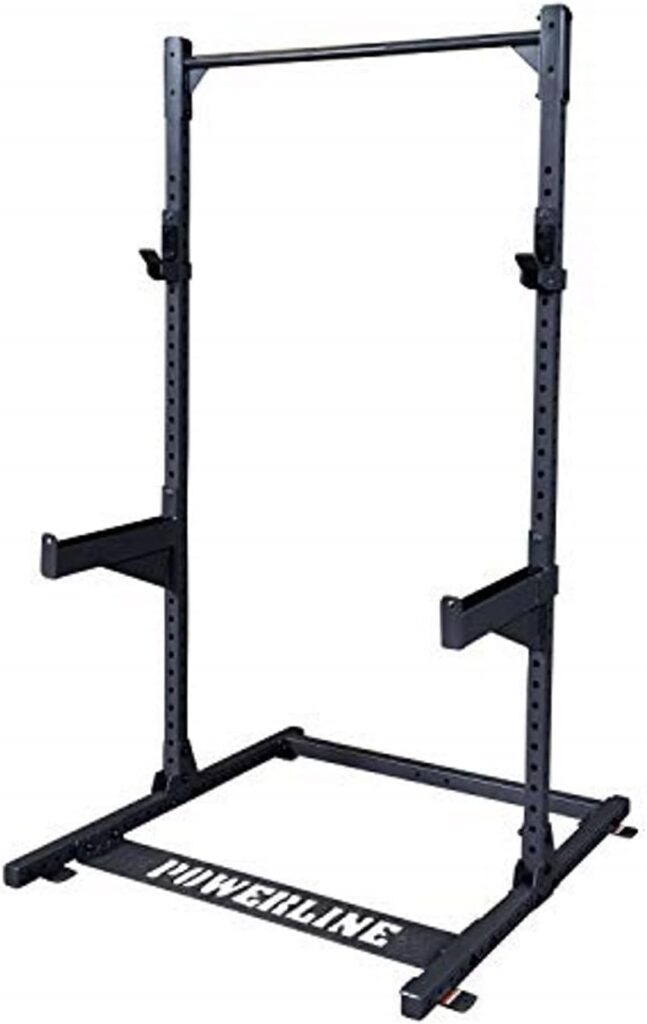
A compact squat stand from Body Solid is typically ideal for families.
Why:
- Smaller footprint
- Budget-friendly
- Includes safety arms
- Easy to progress into
👉 View Body Solid Half Rack here →Body Solid Half Rack
Safety arms are non-negotiable. They make home lifting dramatically safer.
3. Progressive Loading Equipment
Before introducing a barbell, many athletes benefit from adjustable dumbbells. A durable option many families use is from PowerBlock. These allow gradual strength progression and excellent movement control.
👉 See PowerBlock Adjustable Dumbbells → POWERBLOCK
Dumbbells are often the ideal bridge before barbell work. Other adjustable dumbbell options can be found here.
When Should You Avoid a Barbell?
Do NOT introduce barbell training if:
❌ Your athlete cannot control bodyweight movements
❌ There is no supervision
❌ The goal is chasing numbers
❌ You lack safety equipment
Barbells amplify movement patterns.
They make good mechanics stronger — and poor mechanics worse.
A Safe Progression Path for Youth Athletes
If you’re introducing strength training at home, this is a safe progression:
1️⃣ Bodyweight mastery
2️⃣ Resistance bands
3️⃣ Adjustable dumbbells
4️⃣ Youth-scaled barbell
5️⃣ Gradual progressive loading
When implemented properly, barbell training improves:
- Strength
- Power
- Bone density
- Joint stability
- Injury resilience
Final Verdict: Is a Barbell Safe for Youth Athletes?
Yes — when:
✔️ Equipment is scaled appropriately
✔️ Technique is prioritized
✔️ Load progression is gradual
✔️ Supervision is consistent
Unsafe training is not caused by barbells. It’s caused by poor planning. Strength built early and correctly will prevents injuries later.
Recommended Youth Strength Setup
If you’re ready to build a safe home setup:
👉 View the Titan Youth Barbell here →Titan Fitness Youth Barbell
👉 View Body Solid Half Rack here →Body Solid Half Rack
👉 See PowerBlock Adjustable Dumbbells → POWERBLOCK
Start scaled. Progress gradually. Build durability first.
Frequently Asked Questions
Is a barbell safe for youth athletes?
Yes, a barbell is safe for youth athletes when training is supervised, equipment is scaled appropriately, and load progression is gradual.
At what age can a child start barbell training?
There is no strict age requirement. Most youth athletes can begin light barbell training once they demonstrate proper movement mechanics and maturity.
Do barbells stunt growth in kids?
No. Research shows properly supervised resistance training does not stunt growth or damage growth plates.
What is the safest barbell for kids?
A junior or youth-scaled barbell with a lighter starting weight and smaller grip diameter is the safest option